06 April 2025

ICYMI - The Boxer Rebellion, and the Story of Annie Allender Gould

(Originally published January 2017)

Empress Dowager Cixi
whose Decree caused
such bloodshed
The Boxer Rebellion was a violent movement in China which targeted Christians, missionaries in particular, between 1899 and 1901. It was initially a nationalist group (“Boxer” was the English translation for the name of this group) that pushed for expulsion of foreigners and their interests and eventually grew into a much larger movement. 

When the Boxers finally blockaded the Legation Quarter of Beijing, which housed many foreigner delegations and missions, the Empress Dowager Cixi (believing that armed invasion to lift the siege was immanent) weighed in and supported the Boxers through an Imperial Decree “declaring war on foreign powers”. This led to the killing of many foreigners and significantly more native-born Christian converts in China, mostly in the northern provinces near Beijing.

According to Wikipedia, a total of 136 Protestant missionaries, 47 Catholic nuns and priests, 53 foreign children, and thousands of convert Chinese citizens were killed during the rebellion. In all, between 2,400 and 2,600 people were killed after Empress Dowager made her proclamation supporting the Boxers.[i]

Annie Allender Gould was my great-grandfather’s first cousin and was, therefore, my first cousin three times removed. She was also a Presbyterian missionary in China and one of the 136 Protestant missionaries killed by the Boxers. Laying aside the moral questions of attempting to convert people to one's own religion, this is a depiction of a violent episode in history and its impact on a family.

24 July 2023

ICYMI - Repost: Dual-year dates and other calendar anomalies explained

Originally posted on April 21, 2017

When I first started my family history research, I quickly ran into some older date notations I didn’t understand. They were listed as two years instead of one. For example, I would see a birth listed as 21 January 1680/1. I had no clue what that meant, and no one to ask.


I did, however, have the Internet and I assumed that I would only be one of many amateurs who were confused by this, so I looked at Ancestry.com, at the New England Historic Genealogical Society website (AmericanAncestors.com) and other genealogy sites, thinking this would surely be addressed in their FAQ section or on some “basics of research” page. I was wrong – I could not find any such explanation anywhere.


I did further research, finally finding a Wikipedia entry, which I paraphrase below.  At the end of this post, there is a link to the article (very interesting reading).

One depiction of a multi-year date from a Robert Hicks sketch
Another depiction from a William Mann sketch

12 March 2023

A Trip to Europe! Part 4 of 4

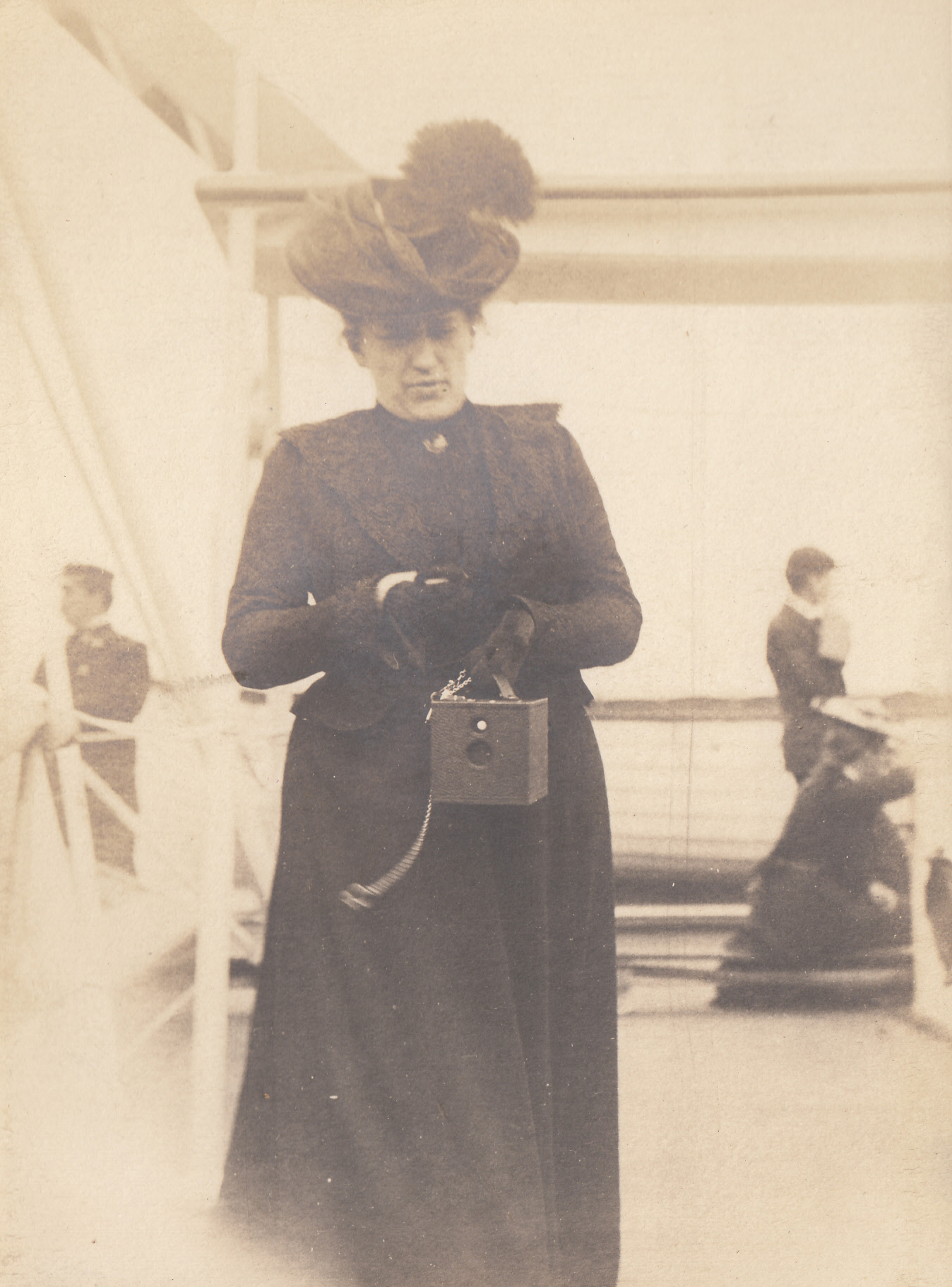
Fannie Sturtevant Woodruff
with her camera
In parts one through three, I detailed much of the European adventure my great-great grandparents, Fred and Fannie (Sturtevant) Woodruff gave their family in the summer of 1901. During their two-month tour, they took a great many photographs and I am lucky to have the original album in my possession. It contains the only photographs I have of the family, including my great-grandfather, Lewis Sturtevant Woodruff, who was age 20 at the time of the voyage.

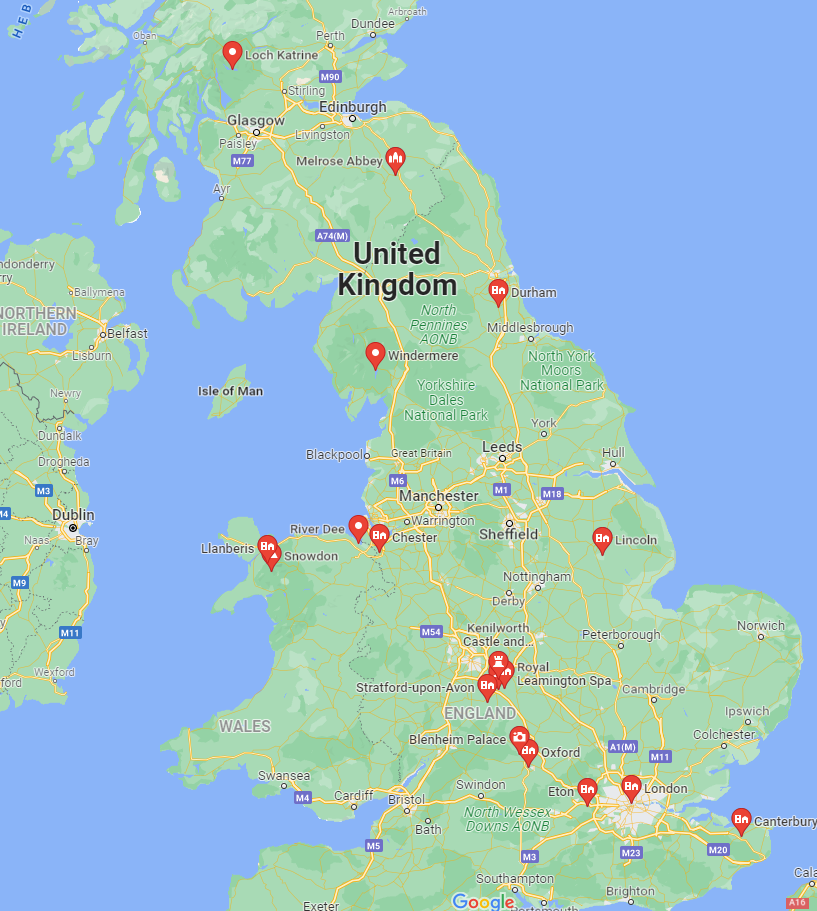
Already documented is their voyage across from Boston, their travels across England, Scotland, and Wales, their stop in Paris, and their travels in Switzerland. As I noted in my previous posts, the order in which they placed their photographs in the album does not reflect what I would consider to be an accurate order of the places they visited. In particular, in England, Eton appears multiple times in different parts of the album, but I doubt they went back three times. And the Switzerland trip starts in the southeast of country and ends in the southwest, after which the family is in Germany to the north of Switzerland. Please see blog posts two and three for maps detailing all the locations of their photographs.    

20 February 2023

A Trip to Europe! Part 3 of 4

Prior posts explained the photo album documenting a trip to Europe taken in 1901 by my Woodruff ancestors and the start of their journey in Scotland, Wales, and England. The photos appear to be out of order (including one photo from Paris!), and it is unlikely that they were placed in the album in chronological order. 

From England they crossed the channel and started their adventures on the Continent, visiting France, Switzerland, Germany, and the Netherlands. The photographs appear to be in a better order than those from the first part of their journey, but they are not in the exact order of their trip unless they crisscrossed back and forth across Switzerland.

The map shows all the locations from which they took photos, with the exception of photos taken on the river Rhine.
    

30 January 2023

A Trip to Europe! Part 2 of 4

Part one of this post took us through the family photo album up to their voyage across from Boston to Liverpool. The first section of the album after the crossing contains photographs from their travels across Scotland, Wales, and England.

The order of the photographs in the United Kingdom, as I mentioned before, appears to be out of order unless the family crisscrossed and doubled back on themselves. They covered a lot of ground, visiting Scotland, Wales, and central England. The map shows all the places where they took photographs.


13 January 2023

A Trip to Europe! Part 1 of 4

Album page 1
Around 25 years ago, an uncle on my father’s side, knowing my interest in preserving and keeping important family relics, gave me a photo album of a 1901 family trip to Europe. My great-great grandparents took two of their three sons, my great-grandfather included, on a two-month grand tour and documented it in photographs. The photographs and annotations indicate that they visited Scotland, England, and Wales on arrival, then went to the Continent to visit France, Switzerland, Germany, and the Netherlands.

There is no other account of this trip, however the photographs, notes, and available online records provide a wealth of information that has allowed me to perform further research and learn quite a bit about their holiday. I’m particularly grateful to have this album because it contains the only photographs I possess for these family members.

05 June 2022

A 317 Year Old Business, an 85 Year Old Painting, and Three Families Part 2 of 2

But What About the Painting?

The historical preamble in part one sets up the connection between the inherited painting, the longest-operating business in the United States, and my family.

I was prompted to research this painting because of Bill Kahl’s comments about it when I was visiting with him in 2012. Bill described the painting to me as follows:

“It was painted by John Howard Benson, the grandfather of Nick Benson. It is a painting of Lawton’s Valley in Middletown . . . my last recollection is that it hung just off the kitchen in their [my grandparents’] house in Kingston [RI] . . . the painting is an oil painting of a woodland scene in a heavy gold frame.”    

29 May 2022

A 317 Year Old Business, an 85 Year Old Painting, and Three Families Part 1 of 2

Newport, Rhode Island

My maternal grandmother’s family has longstanding roots in the State of Rhode Island. Through her, we descend from a number of the original settlers of Aquidneck Island, which is now made up of the towns of Portsmouth, Middletown, and Newport. 

Aquidneck Island is named as a derivation from the Narragansett name for the island, “Aquidnet,” but is actually not its legal name at all. The island itself was officially named “Rhode Island” by the year 1637, with varying origin stories, but all tied to the Mediterranean Island of Rhodes. “Rhode Island” remains its legal name to this day. 

The Inn at Castle Hill with downtown Newport in the distance. Conanicut Island to the left.
    

07 March 2021

John Black Journals - A Weekend With the Dirlams Part 2 of 2

Continuation of a three-day excerpt from my cousin John Black’s diaries over the weekend of Friday through Sunday, January 15-17, 1954. In these entries, John describes a weekend visit that he and his brother Peter made to my grandparents’ house in North Stonington, Connecticut. (Note: when John reached the end of a page, he would continue at the top of the same page and sometimes on to other pages in the diary.)

Sunday, January 17, 1954


12 February 2021

John Black Journals - A Weekend With the Dirlams Part 1 of 2

I’ve written extensively about my cousin, John Baxter Black, who was a good friend and who influenced my interest in researching my family history. John was born in Mansfield, OH in 1924 and he died there in 2014 at the age of 90. From 1936, at the age of 12, to the week he died, John wrote a journal chronicling his daily activities and thoughts. 

John Black circa 1954
John left his journals to the New York Public Library, where I’ve reviewed a very small sampling. The collection is extensive and the process of transcribing pages from photos taken with my phone (the only method allowed) is daunting, but rewarding. I’m glad to have access to them. His diaries are dense, crowded with his tight, unique handwriting. I can read most of John’s entries quickly and easily, but it could be a challenge for others. He and I carried on written correspondence for 18 years, many of his letters being handwritten, so I have evolved into an expert at interpreting his scrawl! He wrote to me using a fountain pen in black ink, which matches these entries. 

John comes alive for me in these entries. I read his words and I can hear him speak. I picture him as he chronicles his observations and personality studies, along with his own insecurities and worries. 

Peter Black circa 1954
This short three-day excerpt from John’s diaries describes a weekend visit that John and his brother Peter made to my grandparents’ house in North Stonington, Connecticut. Over the weekend he encounters my mother, age 12, and her younger sisters, but they are not named in the entry other than collectively. They were “all good.” 

In 1954, at the time of these entries, John was 30 years old and lived in an apartment at on East 67th Street in New York City, just a few steps from Central Park. He was in the process of editing his one and only novel, The Night the Americans Came, which was published eight years later in London. 

At this moment in time, he was reading two books that he had purchased earlier in the month: The Diaries of Virginia Woolf and Gwen Raverat’s memoir, Period Piece (Raverat, a wood engraver in England who died a few years later, was Charles Darwin’s granddaughter). 

One note: when John reached the end of a page, he would continue at the top of the same page and sometimes on to other pages in the diary. With this bit of context, the entries for those three days: 

10 September 2020

Proving (and Disproving) my Family's Mayflower Connections, part 2 of 2

As detailed in the first part of this post, 2020 marks the 400 year anniversary of the Mayflower crossing to New England. Many of the celebrations and commemorations that have been planned for years in the build-up to this year’s landmark anniversary have been delayed, altered, or scrapped entirely, due to the current COVID-19 crisis, which is, sadly, how 2020 will likely be most remembered. The crisis notwithstanding, Mayflower commemorations will continue into 2021 and still with great significance. Although “401st anniversary” doesn’t roll off the tongue as easily, it is still an impressive milestone, one year more so than the 400th! In fact, the Pilgrims’ first Thanksgiving celebration (setting aside the concerns about the historical accuracy of the event) didn’t take place until November in the year after they made landfall, which means that in 2021 we’ll celebrate the 400th Thanksgiving.

In my earlier post, I also recounted the way, during my 2012 research to prove our Mayflower connections, in which I had to summarily negate a long-held and cherished Mayflower descent in my family. We had long thought that we were descendants of Francis Cooke of the Mayflower through his daughter Jane. We knew that we were descendants of her husband, Experience Mitchell, and until the 1980s, all of Experience’s children were still being admitted to the Mayflower Society as descendants of Jane Cooke and her father Francis. However, research published in 1973 shows that only a few of Experience Mitchell’s children qualify. Jane Cooke died early in their marriage and Experience married again. Only two of his eight children could have been Jane’s, and we descend from a child of his second wife, thus eliminating our Mayflower connection through Jane.


After this dramatic correction to my family legends, there was still one more Mayflower connection outlined in Elizabeth Rowland’s family history, so the next step for me, back in 2012, was to prove or disprove that other descent. Given what I had just encountered, I was naturally concerned at what I might find! I really didn’t want to erase our only remaining Mayflower connection that same day. If I wanted to prove the connection, however, I had to take that chance.

05 July 2020

400th Anniversary of the Mayflower Crossing and Proving (and Disproving) my Family’s Mayflower Connections, part 1 of 2

Wedgwood saucer commemorating
the Mayflower 350th anniversary
in 1970, inherited from my
maternal grandmother
2020 marks the 400th anniversary of the Mayflower crossing to New England. Commemorations of the voyage’s quadricentennial (I had to look that one up!) began several years ago, with a number of organizations not only focusing on the original passengers, but also on their modern-day descendants. A number of organizations are taking a hard look, too, at the impact of the Pilgrims on the native Wampanoag Nation. The current worldwide COVID-19 crisis has put a halt to most of the events planned for 2020, but some (like my college reunion this year) may be postponed until 2021. Others may go online.

Note to my family members: The Woodruff line of my family does not have any Mayflower connections that I’ve been able to discern, and given that I have traced the Woodruff line back to the days of the Pilgrims, it is unlikely that one will emerge. The Mayflower descent outlined below is through my mother’s family, so it applies to my mother, my brother, his son, our maternal first cousins, my mother’s maternal first cousins (full and half-cousins), and me (and many other extended family members too).


05 January 2020

The Woman in the Glass

Among family papers and photographs I inherited from my maternal grandmother, I found what I thought was a photographic glass plate negative of a young woman.  Doing more research, I found a fascinating CBS News article explaining how glass plate negatives had been used starting in the 1850s to “etch” photographic images onto thin glass plates that could then be used to transfer the images to paper.

In the 1870s, a “dry” version of glass negative was created which was easier to use and required less exposure time.  These glass negatives were used for almost all types of photography until the late 1910s, when plastic negatives, known as “films,” were introduced into mainstream photography after 20 years of being inefficient and expensive.  Although the glass plate negatives provided better quality (more clarity of detail) than films, they were more difficult to use, so quickly fell out of use for mainstream photography. (Glass plate negatives remained in use for some professional photography until the 1970s and there is still a small group of photographers who use glass plates today for specialized photography.)

In performing this research, I realized that the glass plate I held in my hand was not, actually, a glass negative.  Glass plate negatives are extremely thin and very fragile.  Mine was thicker and more durable.  I wasn’t sure what to call what I had, but I did know that I didn’t get a very good reading of the figure depicted, so I set about making the image easier to interpret.

31 August 2019

Family History Depicted in Portraits

Lewis Sturtevant Woodruff Jr. ("Bud") and Patricia Mary
Cassils Bunting, my paternal grandparents around the time
of their wedding. None of their grandchildren ever met
Bud and only two of eight grandchildren met Patricia.

Five years ago, one of my Woodruff first cousins was married and I struggled with an appropriate wedding gift.  I am the oldest of my generation by many years, with a whopping span of 32 years’ age gap between me and my youngest first cousin!  Our Woodruff grandfather died before I was born, and our Woodruff grandmother died when I was ten and my younger brother was six.  None of our Woodruff first cousins had yet been born, so he and I are the only two (out of eight of us) who have any memory of our grandmother.

Due to family circumstances, none of my first cousins had much exposure to our family history, but most of them have expressed an interest in learning more over the years.  I decided that I would create something for this cousin’s wedding that could act as an introduction to some of our shared past.

06 April 2019

Unusual and Unanticipated Family Connections - The Edward Gorey Connection


I spent last Christmas in Newport, Rhode Island visiting with cousins and an aunt who live there.  (Some of our ancestors were original settlers of Aquidneck Island and we’ve had a presence in Newport ever since, but that’s a future topic.)  This Christmas in Newport, I gave the same gift to a number of my family members, purchasing one for myself as well: the new biography of Edward Gorey by Mark Dery.  This book, Born to be Posthumous, was perfect for the family, as we all admire and appreciate Edward Gorey’s macabre and unusual art and writing styles.  Ask anyone in our family who is their favorite Gashlycrumb Tiny and we will, to a person, answer Neville.  (He died of ennui.)  My cousin Sophy, always on the same wavelength with me, gave me a copy for Christmas too.  Luckily, I divide time between Atlanta and DC, so we now have a copy in each residence.

Along with the book, I was able to share with them more information which came as a surprise to them: we have a family connection to Edward Gorey!  My mother’s second cousin, John Black (whose name and photograph you have seen in other of my blog postings), was a Harvard classmate of “Ted” Gorey, as they knew him then.  Before he died, John asked me to scan and print some select photos from an album he had collected in the 1950s and 1960s.  Two of those photos were of his friend Ted Gorey reclined on a couch (or a sofa, as I think Gorey would have called it) in John’s apartment on the Upper East Side in New York City.  There is no date on the two photos, but other photos on the page are dated 1953 and 1963, so the Gorey photos could date from anytime in the 1950s or early 1960s.  When I saw the Gorey photos, I quizzed John about the connection, which is when I found that they were Harvard classmates.  He also told me an amusing story about Gorey that I’ll get into later in this post.


A few weeks later I was getting caught up on unread periodicals and found the latest alumni magazine from my alma mater, Occidental College (“Oxy”), in Los Angeles.  To my surprise, I saw an article feature concerning Mark Dery and this new book of his.  Turns out he is also an Occidental College graduate, 3 years ahead of me (as is his wife), yet another small world coincidence!  I immediately wrote an email to the editor of the magazine to exclaim on the fact that this had been my primary Christmas gift to my family this year and to share the family connection.  I also sent a scan of one of the photos from John’s album (right) and invited the editor to share my email and the photo with Dery if the school were so inclined.  Within 30 minutes of pressing “send” on that email I received an email from Mark Dery, the author, himself!    

02 February 2019

Who to Include? Everyone, of Course!


2012 Mini Family Reunion
Some family historians wrestle with the question of how to document non-blood relations.  Should step-children go on a family tree?  How about adopted children?  As keepers of the family record, we are not just involved in the past, defining the relationships of our ancestors, we also deal in the present day.  We document today’s births, marriages, divorces, and all the other myriad life events of the present-day greater family.  In fact, one of our most important roles is to tell the detailed story about the lives of today’s family so that we will leave future family historians with a better understanding than they would be able to glean from public records alone.

There are those who question how much detail to include for either the present or past family narrative.  If there was a second marriage and step-children were brought into the fold, should the tree include those children?  How about their children when they have them?  My answer is that when documenting our family histories, we are not here to just detail the DNA line.  It is our duty to include everyone and everything.  I take this position for several reasons. 

17 November 2018

Inherited Objects Tell Their Own Tales


In my family, both immediate and more broadly, I have the reputation as the one to whom family items can be entrusted.  Relatives near (my parents, uncles, aunts) and more distant (a half-second-cousin once removed, for example) have given me family artefacts, papers, books and other objects over the years. I’ve been fortunate to obtain objects from all four branches of my family.  (See my post Getting Started and Getting Organized for more information on how I segment my family research into four branches.)
RMS Carpathia in New York
after rescuing survivors of the Titanic disaster

From my Woodruff side, I have inherited a large collection of china that came (I had thought) from the family of my dad’s father.  I didn’t believe there was much handed down from my dad’s mother and assumed the china was all from my grandfather.  Although my grandmother was born into a wealthy Canadian family, her family lost everything in the 1929 stock market crash when she was 16 years old.  The following year, she moved to the States and started out on her own in New York City (see my post The Life of an Aspiring Actress – New York in the 1930s).  I always believed that she didn’t bring anything from her family, as they weren’t in a position to keep much.  Her mother went from living in a mansion with servants to living with strangers, her husband having abandoned her after losing the fortune, in boarding houses, so I knew that it was unlikely she would have had any fine china to give her daughter.  I proved to be wrong about this assumption when I researched my Woodruff china and found a possible connection to my grandmother’s family and the Carpathia, the famous ship that rescued survivors of the Titanic.

05 August 2018

The Abrupt End of World War II


My grandfather, Joel Dirlam, during World War II

The 73rd anniversary of the armistice of August 14, 1945 that effectively ended the war with Japan, and, therefore, World War II, is rapidly approaching.  This has motivated me to give further thought to my own family connections with World War II.

Joel Dirlam, one of my grandfathers, served in World War II (my other grandfather had earlier contracted tuberculosis and the loss of part of one of his lungs precluded him from serving) as did Joel’s first cousin once removed, John Baxter Black II.  You can read about the vast amount of information I gleaned from my grandfather’s discharge papers in an earlier blog post here and I’ve written numerous times about our cousin John Black’s influence on my interest in family history.  This is more information about John, who kept a journal (against all orders!) during his time serving in the War.  Although I have not yet reviewed John’s journal, he cites them in his self-published family history.
The Bombe Codebreaker
Machine - citation below


John’s goddaughter, Diana, recorded a video interview with John about his time in the war, just a few weeks before he died in 2015.  Diana’s parents met in England where her father-to-be was serving in the American Army as John’s Commanding Officer.  Diana’s English mother was working at Bletchley Park on Turing’s famous Bombe code breaker machine at the time they met. When they decided to marry, John made all the arrangements for the service, reception and the transport of bridesmaids to and from the ceremony. When Diana was born, her parents named John as her godfather. Recently, Diana asked me for my input on the reading of some of John’s remembrances in the context of a preamble to her video interview.  This prompted me to research what, exactly, John had committed to paper about his wartime experiences.


22 July 2018

Summer Travels


I subscribe to the Weekly Genealogist, an email newsletter published (as you might have guessed, on a weekly basis) by the New England Historic and Genealogical Society (NEHGS).  It’s a great newsletter, with updates on NEHGS databases, webinars, in-person seminars, collection acquisitions, etc.  The newsletter also includes a mini newsfeed, providing links to articles of interest from other sources, as well as blogs and articles on various areas of interest to genealogists.

The NEHGS Library, Newbury Street, Boston
It’s an informative and interesting read each week, but there’s one aspect of the newsletter that I find most compelling: they include a reader survey, with questions I always find of interest.  The newsletter also provides the results from the prior week poll and selected stories that were shared by subscribers that relate to their own survey responses.  Inevitably, as summer approached, one such poll question was “[Do] you plan to travel for genealogical purposes this summer” with multiple options for answers, including visits to libraries/societies; visits to ancestral towns/cities; attendance at a genealogical convention or seminar, etc.

This struck me because most summers I do travel to visit relatives, ancestral locales and to institutions to conduct research.  This summer I am still in the first year of a new job, so the opportunity for taking time off is limited – plus, the summer is our crunch time at work: I am traveling, but not for my own purposes! 

Seeing this poll question did cause me to reflect, though, on past travel that I’ve taken for genealogical reasons or even just to places that played a role in my family’s history.

28 April 2018

A New Royal Baby and Cousin


Welcome to my new 25th cousin once-removed (also my 26th cousin once-removed through a different line), HRH Louis Arthur Charles, Prince of Cambridge.

Royal Family Tree from the Daily Mail
Although this new English cousin and I will never meet, I do have a large contingent of cousins in England who are more accessible.  They’re not really close from a lineage perspective (a lot closer than the Prince of Cambridge!), but they are important to me nonetheless, because I’ve gotten to know a good number of them well.  I have four second cousins once-removed (siblings) and a whole lot more third cousins (and third cousins once-removed!) in the UK. 

They are from a good solid upper middle class background and the four siblings (who are my mother’s second cousins) have welcomed me into their homes and lives, for which I am grateful.  They have children, some of whom have children of their own, thus my thirds and thirds-once, mentioned above.


One difficulty for genealogists in the UK is that many of their vital statistics records were destroyed or simply not kept in the 17th Century during the UK Civil War.  It is very difficult for anyone of UK heritage, particularly in England, to trace their families past the 1700s.  Royal and noble lineages were still carefully maintained, but a large swath of the “regular people” are not able to get back into the 1600s.

My UK cousins, although part of neither royalty nor nobility in the past few centuries, are able to trace a part of their lineage back to William the Conqueror and beyond.  Although their 17th century family records largely fell to the same fate as the bulk of their countrymen, nonetheless they can make that connection.  Here’s how: